My Store
American Black Elderberry
American Black Elderberry
Couldn't load pickup availability
American Black Elderberries
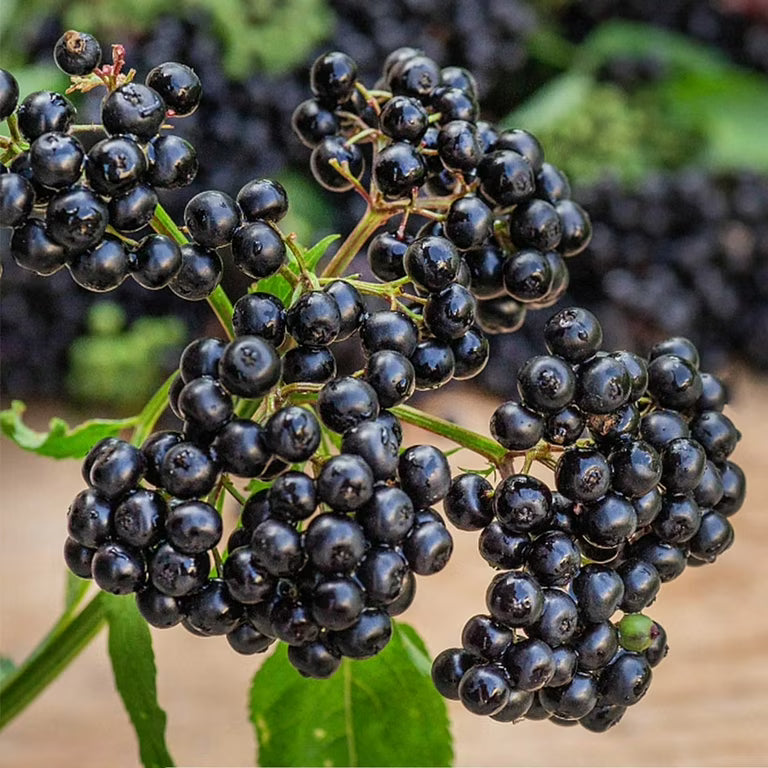
American Black Elderberry is a hardy, native shrub that has been valued for centuries for its dark, flavorful berries, traditionally used in wines, pies, jams, and preserves. This versatile plant is both cold- and drought-tolerant, pest-resistant, and thrives in a variety of climates, making it a reliable choice for home gardens, small farms, and natural landscapes.
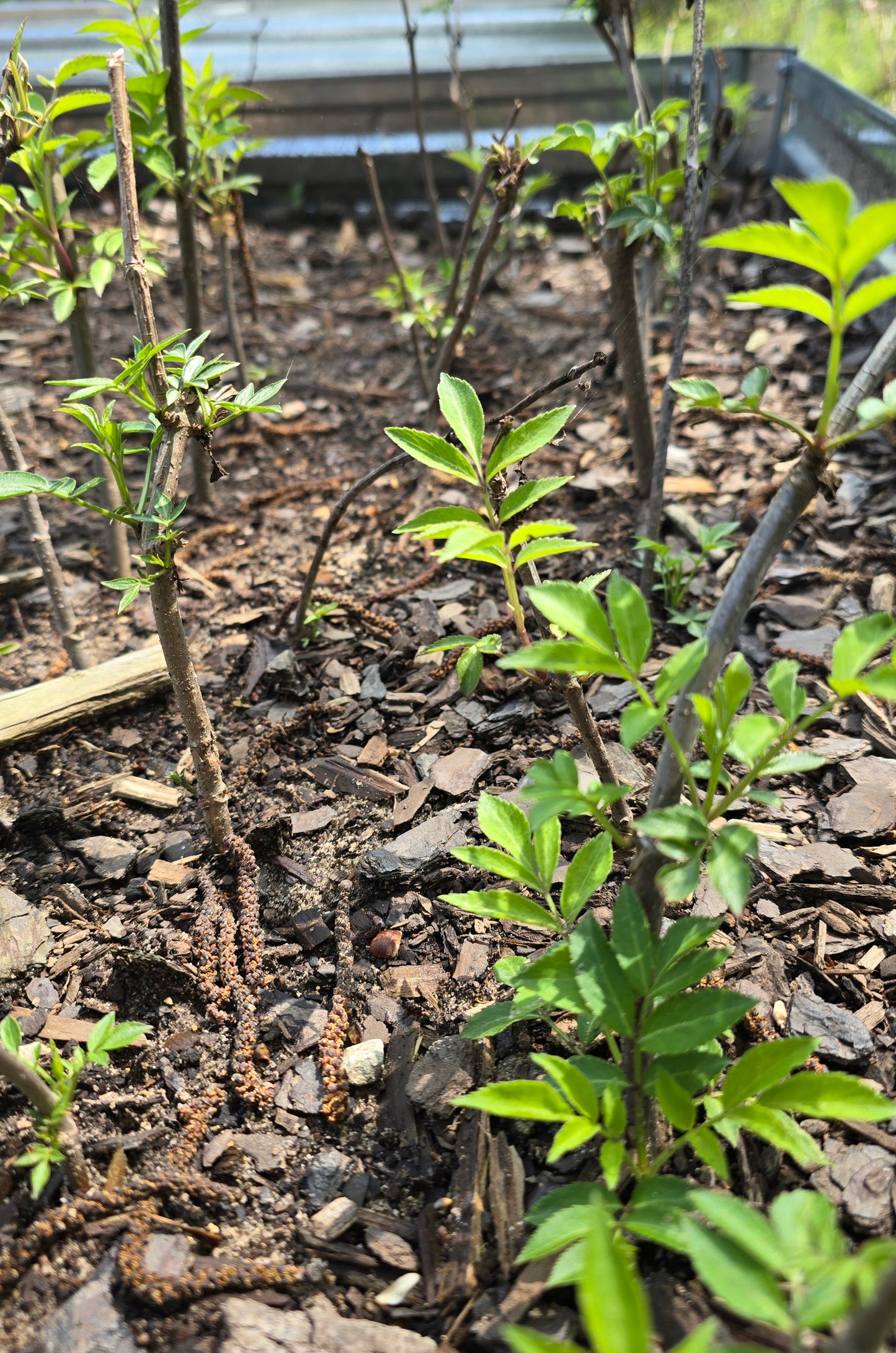
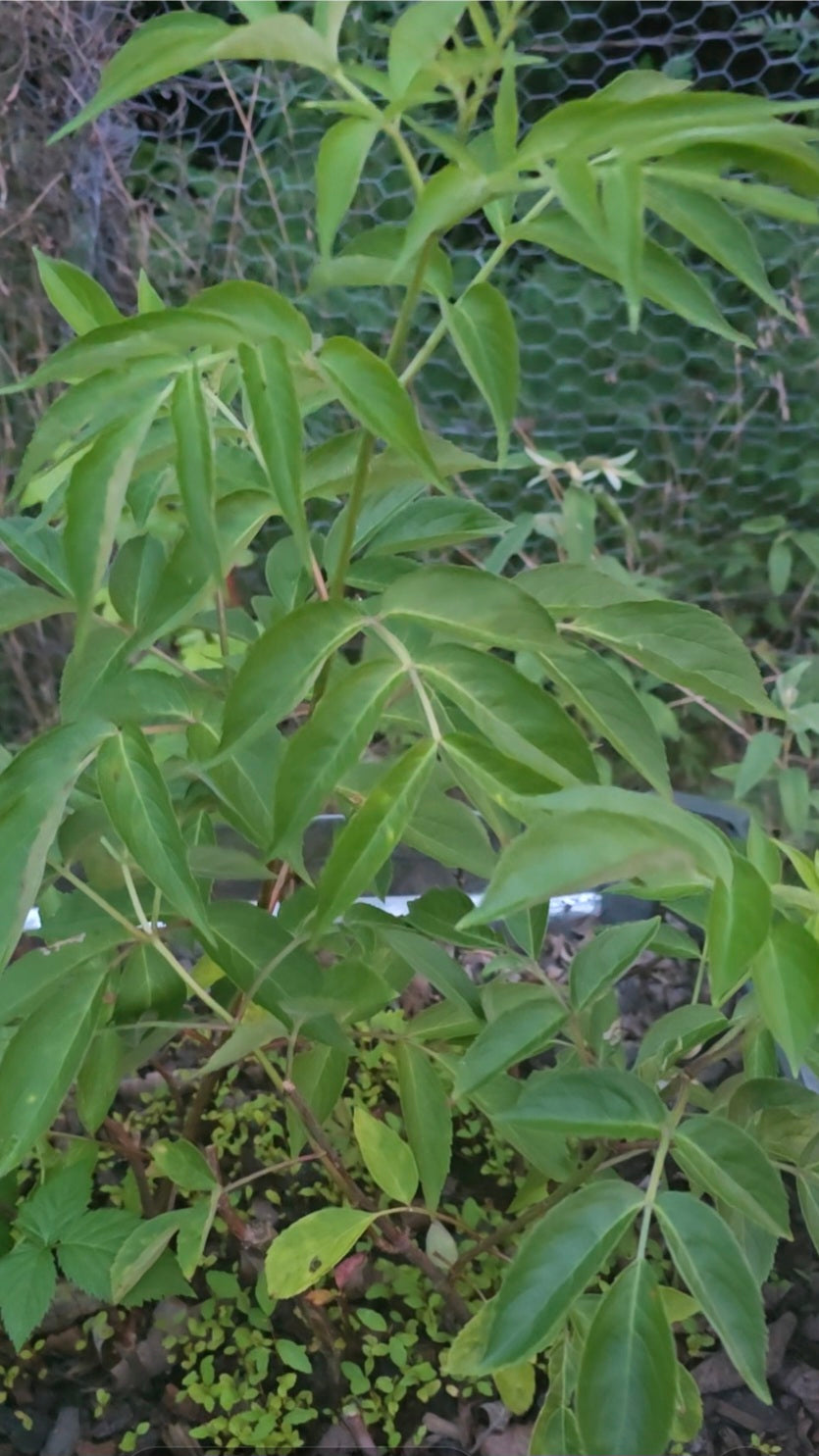
Our American Black Elderberry plants are grown from wild native rootstock harvested for propagation on our farm. Mature shrubs produce large clusters of dark purple to black berries that are highly nutritious and rich in antioxidants.
Mature Size: 6–12 ft. tall and wide
Spacing: 5–8 ft. apart
Harvest Season: Late summer (typically August–September)
Growth Habit: Multi-stemmed, upright shrub
Growing Information
USDA Hardiness Zones: 3–9
Sun Exposure: Full sun for best berry production (at least 6–8 hours daily)
Soil Type: Loamy, moist, well-drained soil
Soil pH: Slightly acidic (5.5–6.5 ideal)
Watering
American Black Elderberries are moderately drought-tolerant once established but perform best with consistent moisture. Give 1-2 inches of water a week. Water deeply once or twice weekly during dry periods, especially during flowering and fruit development. Avoid waterlogged soil, as elderberries do not tolerate standing water. Mulching helps retain moisture and suppress weeds.
Fertilizing
Encourage vigorous growth and abundant fruiting with proper fertilization:
-
Early Spring (before new growth): Apply a balanced fertilizer such as 10-10-10 at ½–1 cup per plant, spreading evenly around the base but 12–18 inches from the crown, then water thoroughly.
-
Late Spring/Early Summer: Apply a lighter feeding (¼–½ cup per plant) to support fruit production and healthy cane development.
Incorporating well-aged compost or manure can also improve soil fertility. Avoid excessive nitrogen, which can produce excessive leafy growth at the expense of flowers and berries.
Pruning
Elderberries fruit on new wood, so proper pruning encourages strong cane growth and higher yields:
-
Late Winter/Early Spring (dormant season): Remove dead, weak, or damaged canes at ground level. Thin overcrowded areas to improve air circulation and sunlight penetration.
-
After Harvest (optional): Cut back older canes to stimulate new cane growth for the following season.
Pruning encourages multiple strong stems per shrub, which supports heavy fruit clusters.
Harvesting
Berries typically ripen in late summer, producing large clusters of small, dark purple to black berries. Pick when fully ripe and dark; berries should detach easily from the stem. Harvest regularly every few days during peak season. Berries can be used fresh, frozen, or processed into juice, wine, jams, or pies.
Propagation
American Black Elderberries can be propagated by root suckers or hardwood cuttings:
Root Suckers:
-
Identify a healthy sucker emerging from the base of a mature plant.
-
Carefully dig around the base to separate the root system from the parent plant.
-
Transplant the sucker to a prepared location, keeping soil consistently moist until established.
Hardwood Cuttings:
-
During dormancy (late fall to early spring), cut a 6–12 inch section of a healthy, pencil-thick cane.
-
Remove lower leaves and plant the cutting vertically in well-drained soil, covering 2–3 buds with soil.
-
Keep soil lightly moist until shoots emerge, then care for the young plant as normal.